


Evaluating real-world performance, safety, and operational challenges of Level 3 & Level 4 Autonomous Driving Features in the US.
The automotive industry stands on the cusp of a significant shift, moving from advanced driver-assistance systems (ADAS) to truly automated driving. Understanding the practical distinctions and operational hurdles associated with Level 3 & Level 4 Autonomous Driving Features is crucial. My experience in testing and deploying these systems reveals both immense promise and complex realities. It is not merely about technological capability, but also about regulatory frameworks, public acceptance, and robust safety validation.
Overview
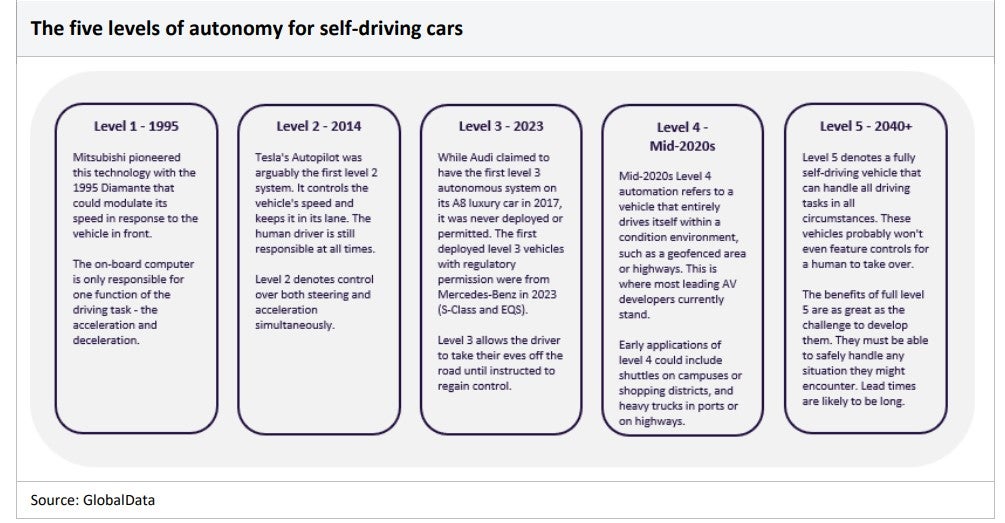
- Level 3 automation requires driver intervention in specific situations, while Level 4 operates without human input within defined boundaries.
- Operational Design Domains (ODDs) dictate where and when autonomous driving features can safely function.
- Real-world testing reveals challenges in perception, prediction, and seamless handovers, especially for Level 3 systems.
- Public trust and regulatory clarity are essential for widespread adoption and safe deployment across the US.
- Safety validation for both levels involves extensive simulation, track testing, and real-world mileage accumulation.
- Redundancy in hardware and software architecture is a non-negotiable aspect for ensuring system reliability and safety.
Operational Design Domains for Level 3 & Level 4 Autonomous Driving Features
The practical application of automated driving hinges critically on its Operational Design Domain (ODD). An ODD defines the specific conditions under which an automated driving system (ADS) is designed to function. This includes environmental factors like weather, lighting, road types, and geographical areas. For instance, a Level 3 system might operate only on highways, in clear weather, and below a certain speed threshold. My work has involved meticulous mapping of these ODDs. We must ensure the vehicle never exits its defined operational space without proper disengagement or human takeover.
Level 4 systems exhibit more expansive ODDs, often limited to specific geo-fenced areas in urban environments. Within these zones, the vehicle is expected to handle all driving tasks, including complex intersections and pedestrian interactions, regardless of typical conditions. However, even Level 4 systems have boundaries. Extreme weather events or unforeseen road hazards outside their programmed capabilities still pose challenges. Understanding these boundaries precisely is paramount for safe deployment. It dictates when the system can operate and when it must defer to a human or pull over safely.
Real-World Testing and Public Acceptance Challenges
Real-world testing presents unique hurdles for advanced autonomous vehicles. Moving from controlled environments to unpredictable public roads exposes systems to countless edge cases. Factors like erratic driver behavior, diverse infrastructure, and unexpected road debris test the limits of even the most sophisticated sensors and algorithms. In the US, companies conduct thousands of miles of public road testing annually, gathering vital data on system performance. These tests often reveal the subtleties that simulation alone cannot replicate.
Public acceptance remains another significant barrier. Incidents, even minor ones, involving autonomous test vehicles can severely impact public perception. Building trust requires transparency about system capabilities and limitations. Effective public education is necessary to differentiate between various levels of automation. Many people still conflate Level 2 driver assistance with fully autonomous capabilities. My experience shows that clear communication about system responsibilities, especially for Level 3 systems requiring driver readiness, is absolutely critical. This helps manage expectations and foster confidence.
Key Differentiators in Level 3 & Level 4 Autonomous Driving Features
The core distinction between these two automation levels lies in driver responsibility and system fallbacks. A Level 3 system, often termed “conditional automation,” allows the driver to disengage from active driving tasks under specific ODDs. However, the driver must remain available to take over control when prompted by the system. This handover process is a significant point of failure if the driver is not attentive or reactive enough. We have observed this scenario firsthand during testing. The driver must regain situational awareness rapidly.
In contrast, Level 4 systems, or “high automation,” do not require human intervention within their ODD. The vehicle is designed to handle all dynamic driving tasks and perform a minimal risk maneuver (MRM) if the system encounters a situation it cannot manage. This could involve safely pulling over or coming to a stop. The system is responsible for its own safety within its defined operational limits. This fundamental difference in driver involvement profoundly impacts system architecture, sensor redundancy, and fallback strategies, making Level 4 inherently more robust in its operating environment.
Assessing Safety and Redundancy in Level 3 & Level 4 Autonomous Driving Features
Safety is the paramount concern for any autonomous driving system. For Level 3 & Level 4 Autonomous Driving Features, this requires a multi-layered approach to validation. It includes extensive simulation, closed-track testing, and vast public road mileage accumulation. Each system undergoes rigorous verification against countless scenarios, including potential failure modes. Redundancy is built into critical hardware components like sensors, processors, and actuation systems. If one sensor fails, another must seamlessly take over. This ensures the system maintains operational integrity.
The development process involves identifying and mitigating risks at every stage. Functional safety standards, such as ISO 26262, guide this work. Performance metrics include reaction times, decision accuracy, and the frequency of disengagements or interventions. For Level 3 systems, the reliability of the driver handover mechanism is also a key safety metric. Regulators in the US are actively working to standardize safety assessment methods for these advanced systems. Trust in these features is built upon demonstrably robust safety engineering and continuous validation in diverse real-world conditions.





